
The checks that matter before money changes hands: what to look at, what to ask the seller, what each problem really means, and how a good arm should be packed.
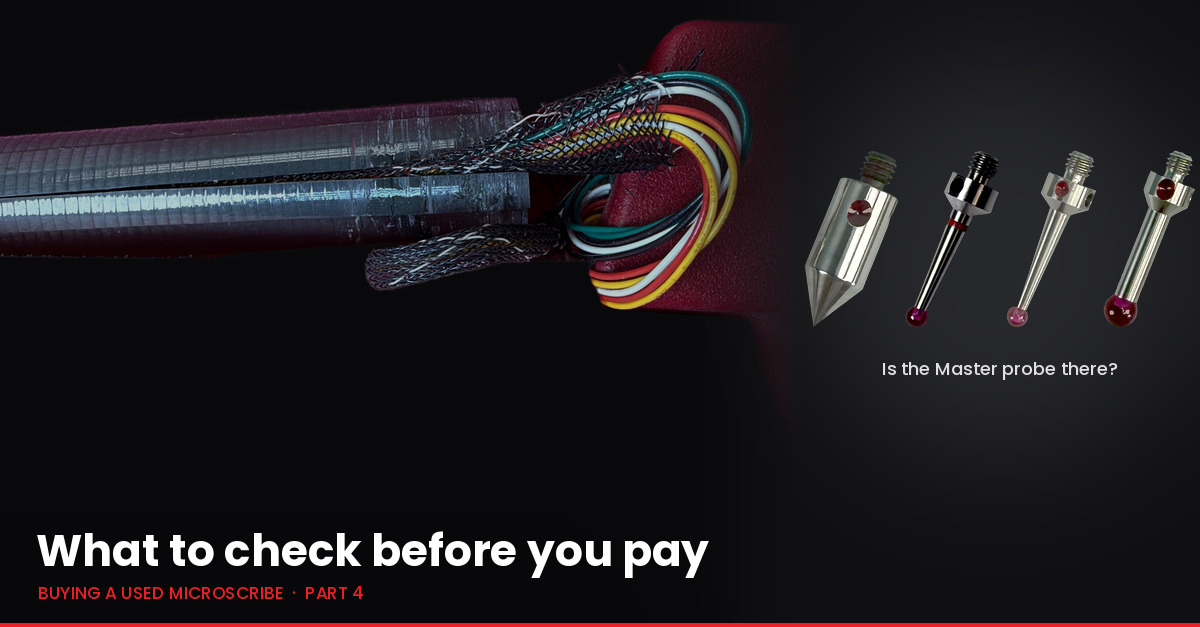
Last time I covered how to tell which MicroScribe you are looking at. Now the checks that matter before money changes hands.
Look and feel
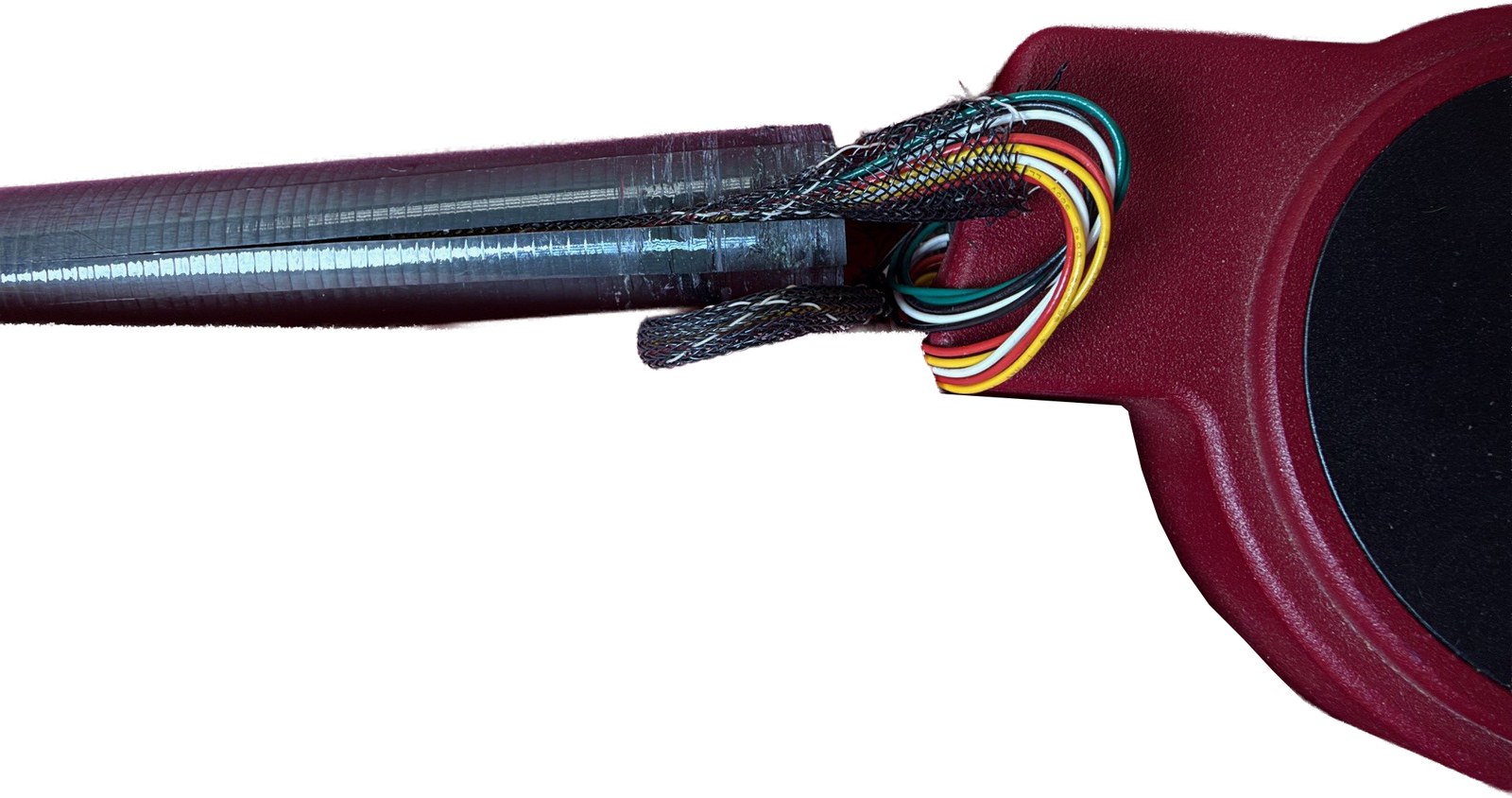
- Carbon fiber tubes. Any crack is a costly repair.
- Joints. Each one should move freely and feel perfectly smooth. Roughness or catching means a corroded or damaged bearing.
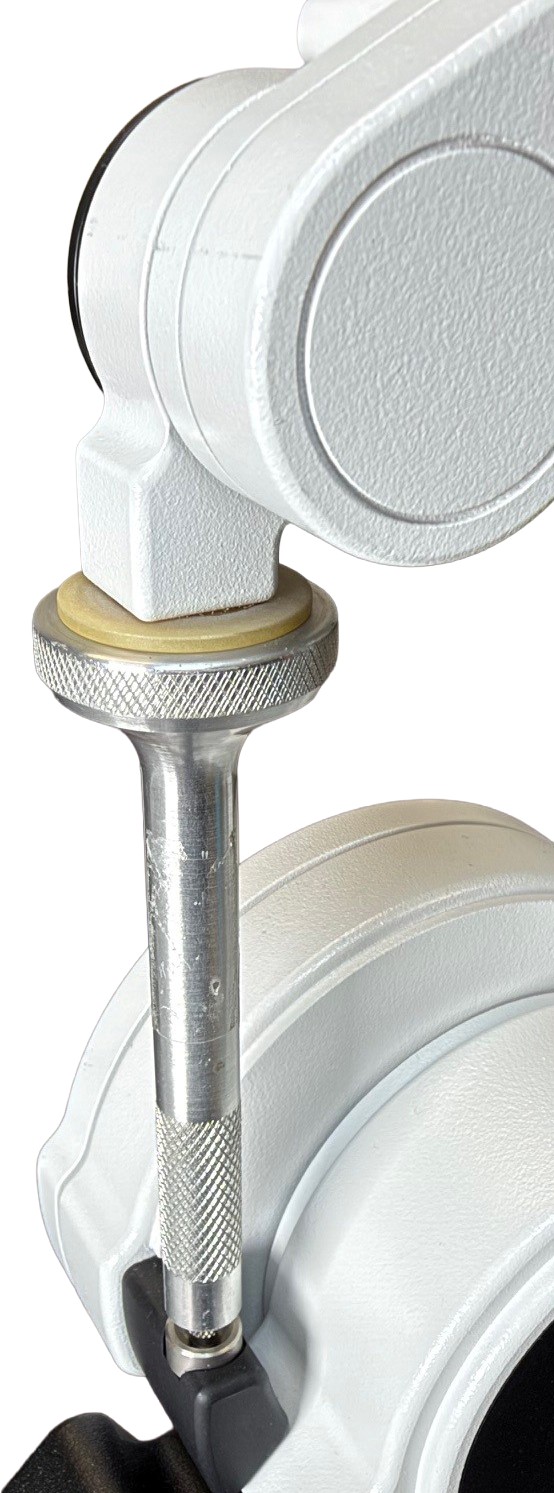
- The stylus. On a standard arm only the probe tip comes off, and the stylus is a straight tube. If the whole stylus removes, or it is not straight, it is an OEM arm, and many of those show up without the custom probe they were built with.
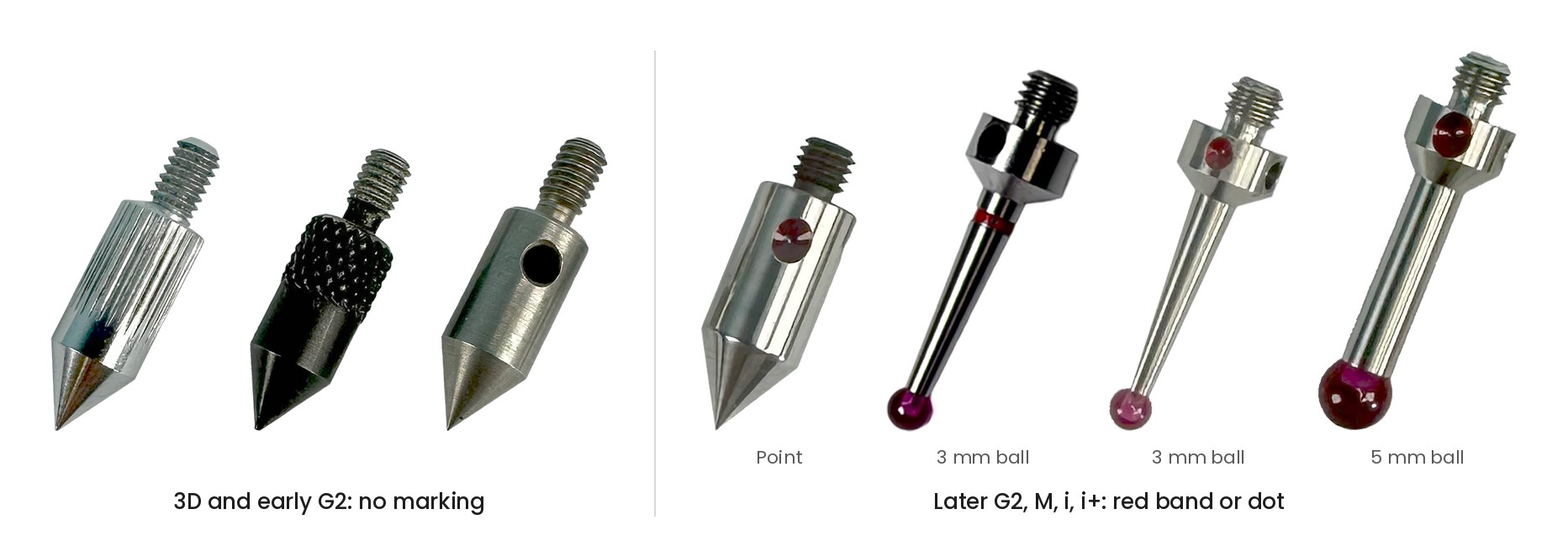
- The Master probe. Later G2, M, i, and i+ arms mark it with a red band or dot. 3D and early G2 probes carry no marking.
Ask the seller
- Does it power up, and does the LED turn green right away or after pressing Home?
- Do the joints move freely and feel perfectly smooth?
- Any cracks in the tubes?
- Is the Master probe there, with all the accessories?
- If the arm needs a power supply, how many volts is it? 9 for an M series, 5 for everything else. 12 means a substitute supply has probably damaged the arm. (More in Part 2.)
- Can you send a screenshot or video of the Arm Tester following the arm?
- How will it be packed? Do you have the original container?
What it means if something is wrong
From least to most costly:
- Missing power supply, hand switch, or USB or serial cable: buy it from our web store. No repair needed.
- Missing Master probe: buy one first. If you are not sure which probe your arm needs, ask us and we will tell you if our records show it. If the arm still measures poorly, send it in. The probe stays useful either way.
- Everything else needs recalibration on top of the repair, which adds real cost. In rough order: a worn bearing; a damaged, OEM, or missing stylus; a cracked tube; the main board; the wiring harnesses.
| Problem | What to do | Recalibration? |
|---|---|---|
| Missing power supply (M series), hand switch, USB or serial cable | Buy from the web store | No |
| Missing Master probe | Buy one first; send the arm in only if it still measures poorly | Only if it still measures poorly |
| Worn bearing | Repair | Yes |
| Damaged, OEM, or missing stylus | Repair | Yes |
| Cracked tube | Repair | Yes |
| Main board | Repair | Yes |
| Wiring harnesses | Repair | Yes |
Which Master probe your arm most likely uses:
| Model | Master probe |
|---|---|
| 3D, G2 | Most likely a point probe |
| M series | 3 mm ball |
| i | 3 mm ball or point |
| i+ | 5 mm ball or point |
One exception: the 3D series
A 3D series arm has no repair route. Everything inside is obsolete and likely degraded. Even the harness shielding turns brittle with age and breaks into debris when flexed. The only path is our PLUS Upgrade.
Packing matters
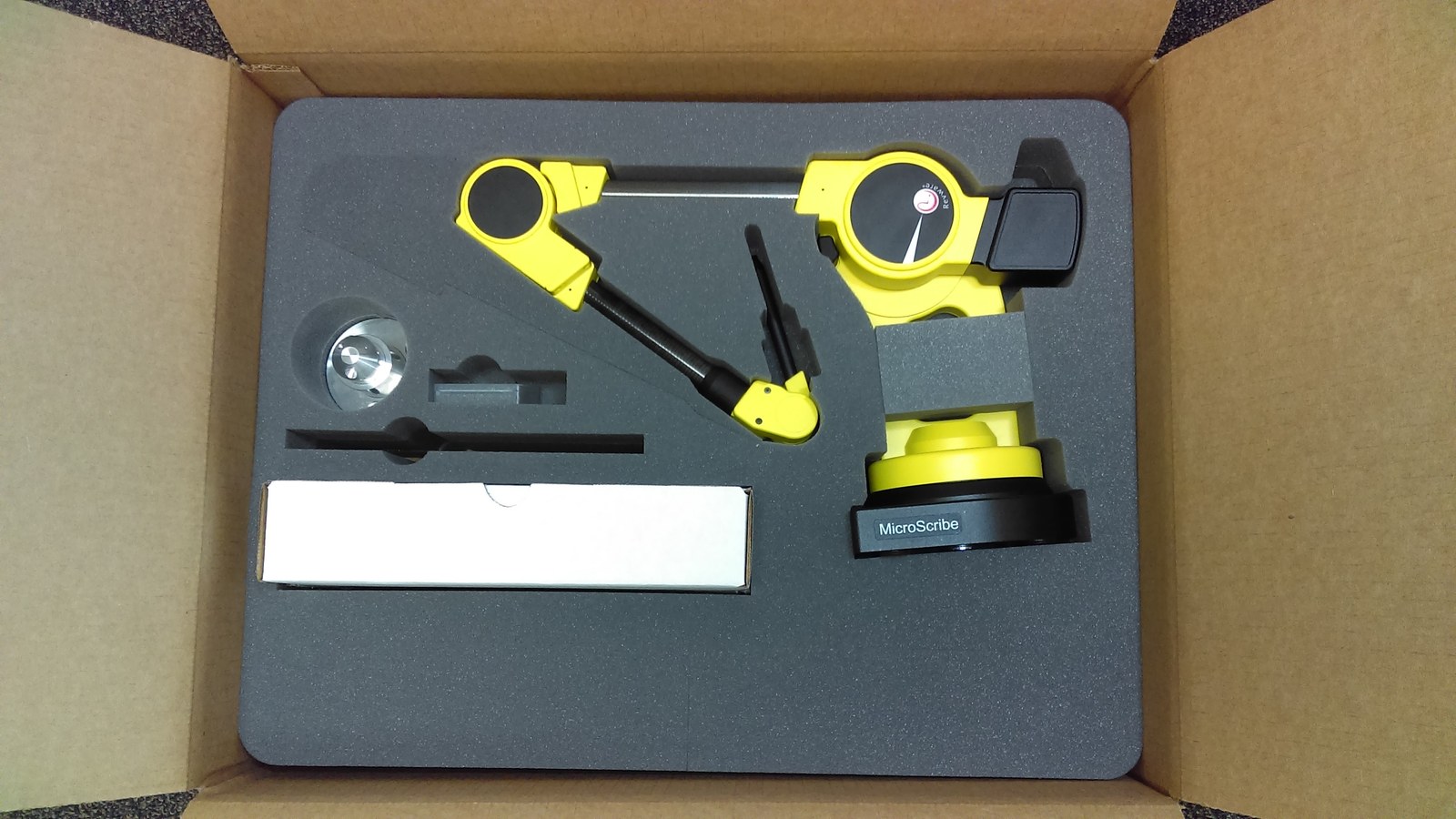
Good arms get damaged in transit. The original box has custom foam with a precise cutout, and the arm folds so no joint is stressed. Always remove the probe tip. Shipping boxes with the correct foam are in our web store, and the pictures there show how the arm should sit.
When in doubt
With the right Master probe and an arm in good shape, it will measure within its specified accuracy once properly homed. If it measures consistently but out of specification, it may be the wrong probe, or something else is wrong. When in doubt, we evaluate arms: request an evaluation from our support page.
Next time: what it can become.
About Revware
Revware provides high, quality, simple to use, innovative, cost-effective modeling solutions to solve your design, metrology, and engineering problems.